Garden rooms in Cornwall — the regional design and access brief
What changes about building a garden room in Cornwall. Granite plots, Atlantic exposure, tight lanes, and the design language that reads well against the county's palette.
Cornwall accounts for roughly 12% of our annual build volume — enough to have developed a genuinely Cornwall-specific working brief. The county has three things that materially change a garden-room design: granite bedrock, Atlantic-facing wind exposure, and a design vernacular that punishes anything that looks 'imported' from the London suburbs. This is what we've learned.
The three things that change
- — 01Ground conditions. Much of west Cornwall sits on shallow granite bedrock — 400-800 mm below the surface in places. Standard ground screws don't reach virgin bearing because they hit rock first. We route those plots through short concrete pier foundations instead, at a small cost premium.
- — 02Wind exposure. Atlantic-facing plots (Padstow, Rock, St Ives, Sennen, Land's End, Cape Cornwall) sit inside wind exposure category IV on the Eurocode 1 map — the highest UK category. Panel connections, cladding fixings and roof edge details all upgrade from our standard spec.
- — 03Salt-air load. The whole north Cornwall coast and much of the south is inside the 2-mile coastal band we treat as marine-exposure. Cladding, fixings, roof edging and window frames all step up to marine-spec — see the coastal properties article for the layer-by-layer breakdown.
Design language for Cornwall
Cornish planning officers — and the neighbours who quietly file objections — have developed a strong sense of what belongs in the county and what looks parachuted in. The moves that consistently pass and read well:
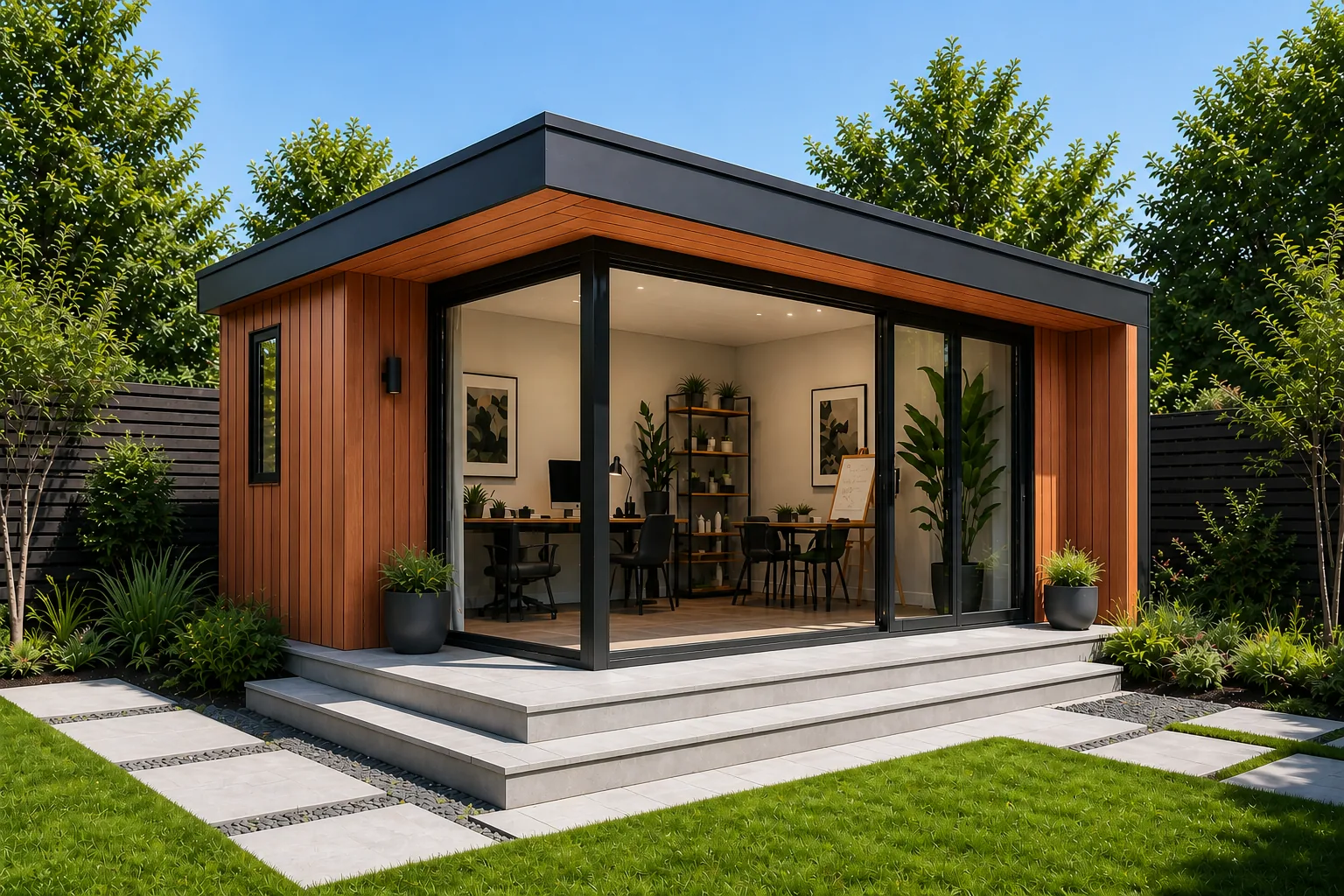
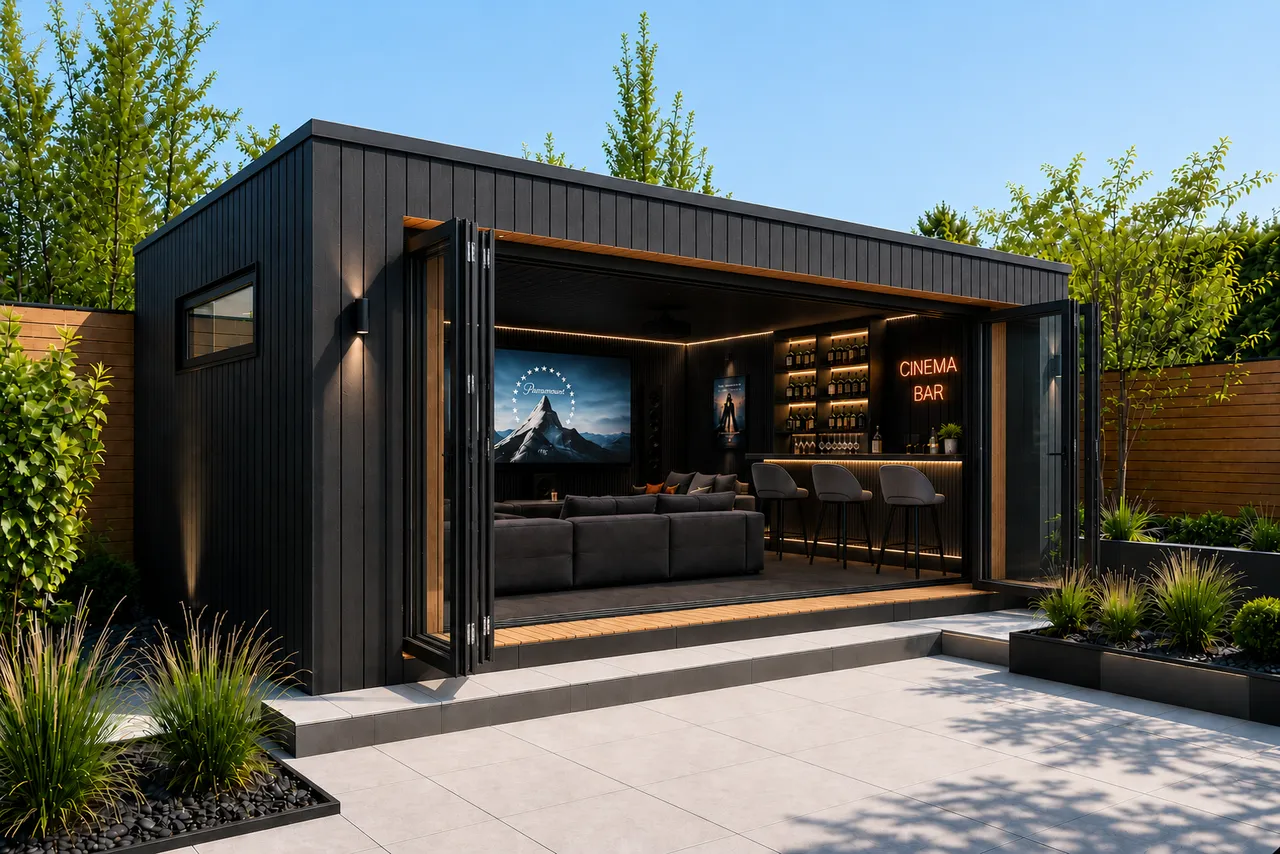
- — 01Charred cedar or thermo-treated ash cladding. Reads dark, quiet, weathered. Sits well against granite and gorse.
- — 02Slate-look or dark EPDM roofs, not membrane in a light finish. Slate is the county's default vernacular.
- — 03Anthracite frames, not white uPVC. Anywhere.
- — 04Low mono-pitch or flat roofs. The higher, dual-pitched forms don't sit right against Cornish valley plots.
- — 05Chunky, honest detailing — flush corner returns, hidden fixings, real cladding overlap. The county rewards buildings that look considered rather than clever.
Access — the Cornish reality
The A30 is the county's spine, and most of our Cornish plots sit within 20 minutes of it. What changes is the last mile. Cornwall's lanes are famously narrow, and the difference between an access we can drive down and one we can't is often 300 mm. Every Cornish quote we send is preceded by an access survey using Google Street View and, where sensible, a site visit.
Where our lorries can't reach the plot, we ship materials in from a satellite drop point (usually a farmhouse yard or field entrance) using a tracked mini-loader. Adds £600-900 to install day but it means we can build in places others can't. The best access-constrained job we've done was a Padstow harbour-back plot reached only through the local pub — the pub carpark was cleared for the day and the panels went through the beer garden.
The regions we work in most
- — 01Truro and the Fal — the working professional heartland. Truro consultants, Falmouth academics, Feock retirees. Standard South Devon-equivalent spec with marine-spec upgrades on the water.
- — 02Padstow, Rock, Wadebridge — the Atlantic-facing coastal cluster. High-value plots, marine spec, careful design.
- — 03St Ives, Penzance, west of Truro — the artist and retiree market. Design-heavy briefs, often architectural mono-pitch, high spec.
- — 04Bude, Boscastle, Tintagel — north coast surf-and-walking country. More utilitarian briefs, fewer aesthetic constraints, still marine spec.
- — 05Fowey, Looe, south coast — sheltered from the Atlantic, closer to standard South Devon spec.
Delivery and lead times
Cornwall installs sit inside our South West planned-route rotation from the Paignton studio. Typical delivery lead time is 6-8 weeks from approved design. There's a modest travel surcharge (£450-750 depending on plot location) that we publish transparently at the quotation stage. We schedule Cornish installs in clusters where possible — one Padstow week can support three or four builds.
“The Cornish clients who love their garden room the most are the ones who let us design it to belong there. Charred cedar, dark frame, low profile, and the granite dust from installation left where it fell.”— Arden & Oak — design lead
For Cornwall-wide notes see the county hub. For town-specific pages, we cover Truro, Falmouth, St Ives, Padstow, Fowey, Bude, Newquay, Penzance, St Austell, Bodmin, Looe, Helston and Wadebridge in the Areas hub.
The regional hub — every Cornish town we work in.
The coastal cladding brief — most of Cornwall sits inside it.
The full marine-spec walkthrough — Atlantic-facing plots need it.
Areas we cover most for this brief.
Three of the locations we build in most for the reading above. Every plot gets a site-specific spec conversation.