
Savings
- No interest, no repayments
- Immediate ownership
- Cleanest paperwork
Best for
Homeowners with available funds who want a frictionless build.
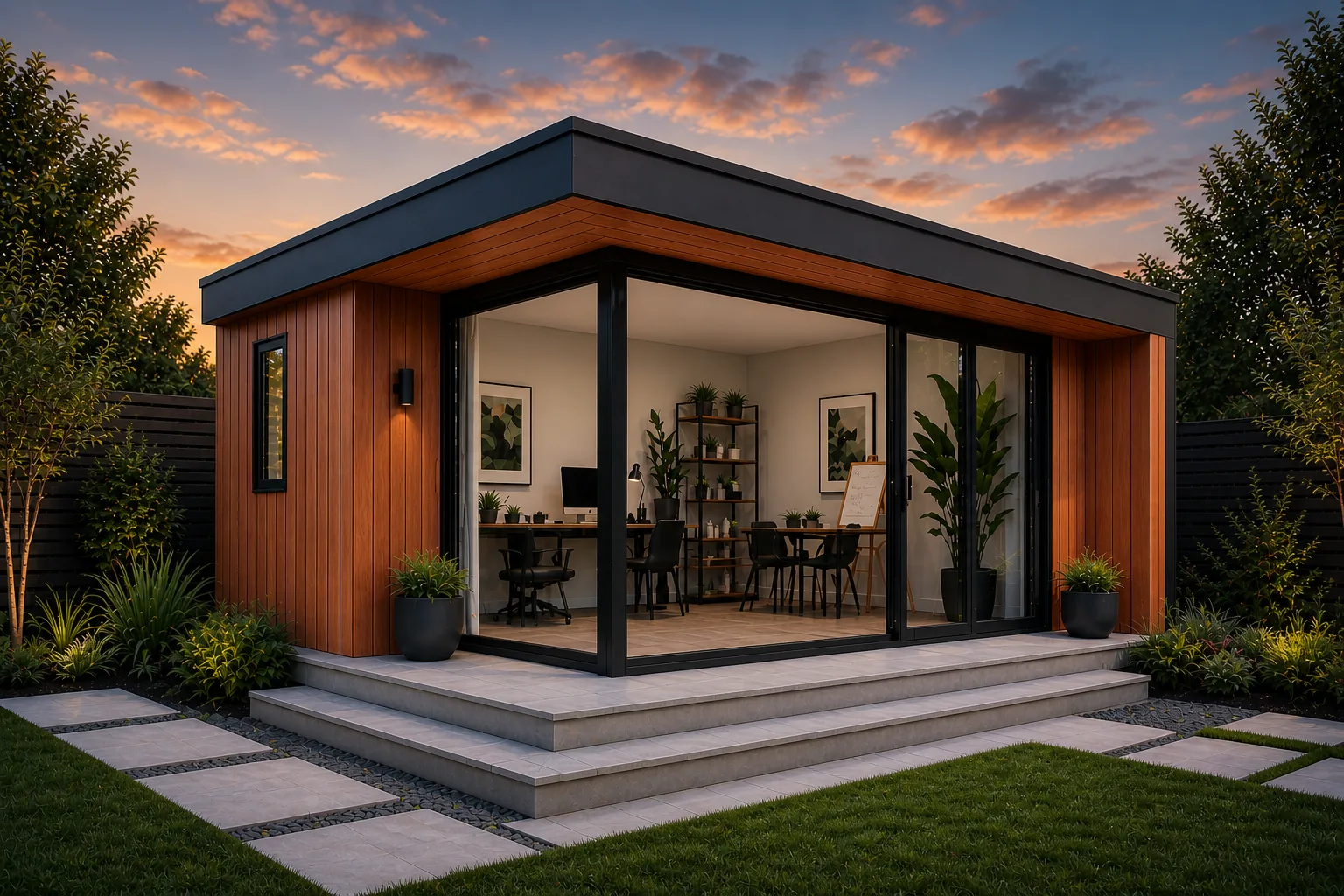
Most customers discover there are simpler, more affordable routes to fund a garden room than traditional retail finance — whether you’re creating a home office, gym, studio or a space that earns its keep.
Before considering how to fund a project of this size, it helps to revisit why so many UK homeowners view a garden room as a sound investment rather than a discretionary purchase.
No commute. Reclaim 6–10 hours every week.
Add a room without the cost of an extension or moving home.
A dedicated workspace, separate from family life.
A gym, studio or wellness space — five steps from the back door.
A premium outdoor living space buyers notice.
Few customers use just one. A combination of savings and a small loan, or home equity topped up with personal savings, is far more common than people realise.
Homeowners with available funds who want a frictionless build.
Mid-range projects when savings aren't earmarked for the build.
Larger projects — often used alongside savings to top up.
Offices, studios, therapy rooms and commercial spaces.
Arden & Oak does not arrange or broker finance. We’ve outlined these routes so you can have an informed conversation with your bank, accountant or mortgage adviser.
Many Arden & Oak buildings earn their keep. When a room generates income — even a small side practice — it can change the conversation around funding entirely. Below are common income-generating uses we see in real projects.
Tax treatment depends on your business structure (sole trader, partnership, limited company), how exclusively the space is used for business, and your individual circumstances. Speak to a qualified accountant before relying on any tax treatment.
The following is a high-level overview — not advice. Tax rules change, and your situation is unique. We strongly recommend speaking to a qualified accountant before making decisions based on potential tax treatment.
Sole traders and limited company directors sometimes claim a proportion of running costs related to a home office. Capital expenditure on the structure is treated differently depending on how the building is used.
Yoga teachers, therapists and personal trainers often run sessions from a dedicated garden studio. Where the space is wholly used for business, services and contents (heating, glazing, electrics) may qualify for capital allowances.
Photographers, musicians and content creators sometimes treat the building as a business asset. Acoustic treatments, lighting rigs and integrated joinery may be claimable depending on circumstances.
For rooms used wholly for business by a limited company, VAT on the build cost may be reclaimable. There can be implications on Capital Gains tax exemption on the main residence — a careful conversation with an accountant is essential.
A plain-English comparison — no jargon, no small print. Use it as a starting point for the conversation with your adviser.
| Savings | Personal loan | Home equity | Business funding | |
|---|---|---|---|---|
| Upfront cost | Full | Deposit only | Re-mortgage fees | Asset deposit |
| Monthly repayment | None | Fixed | Lower, longer | Varies |
| Speed to start | Immediate | 1–2 weeks | 4–8 weeks | 1–4 weeks |
| Affects credit file | No | Yes | Yes | Yes |
| Secured against home | No | No | Yes | Sometimes |
| Suits income-generating use | Yes | Yes | Yes | Best fit |
No — we are a garden room manufacturer, not a finance broker. We don't arrange retail finance, partner with lenders or earn commission on funding. We've put this guide together so customers can make a confident, informed decision in conversation with their bank or accountant.
Yes — personal loans are one of the most common ways customers fund a garden room in the £15k–£40k range. They're widely available from high street banks, decisions are typically fast, and the loan isn't secured against your home. Compare APRs and total repayable amount before committing.
It can — but only where the building is used wholly and exclusively for business purposes. The structure itself usually isn't deductible, but services and contents (electrics, heating, glazing, integrated joinery) often are. Tax treatment depends on your business structure. Speak to a qualified accountant.
If your business is a limited company and the building is genuinely used for business, the company can pay. There are implications around Benefit in Kind, VAT recovery and Capital Gains exemption on your main residence that need to be understood up-front. An accountant should walk you through your specific scenario before you place an order.
Usually yes. A like-for-like single-storey rear extension typically starts at around £30,000–£50,000 and rises quickly once kitchens, structural works and planning are involved. A premium SIP-built garden room of similar floor area is often delivered turn-key for £20,000–£45,000, with no impact on your main building, no planning required in most cases, and a 6–8 week timeline.
Most Arden & Oak projects start with a 10% deposit on order. A further 40% is staged at factory production start, 40% on delivery to site, and the final 10% on completion sign-off. That structure works well alongside any of the four funding routes covered in this guide.
Whether you’re planning a home office, gym, studio or business space, our studio team will help you design a garden room that suits both your lifestyle and your budget — before you commit a penny.