Best cladding for exposed coastal locations
Which garden-room claddings actually survive the South West coast — and which ones we've stopped specifying after seeing them silvered unevenly inside two winters.
The South West coast tests cladding in ways that inland UK builds simply don't have to consider. The prevailing south-westerlies push Channel spray inland for a couple of miles, salt-loaded and repeatedly. UV exposure is stronger than the UK average because of the low sea-reflection horizon. Freeze-thaw cycles are milder than the Highlands but they still happen. And the underlying issue is the same one that boat-builders have known for decades: standard treated softwood strips its finish within three winters on the coast.
For garden rooms in Salcombe, Bantham, Hope Cove, Bigbury, Thurlestone, Shaldon, Maidencombe and everywhere else that faces the water, this is the cladding conversation we have with every client.
The two claddings we specify by default
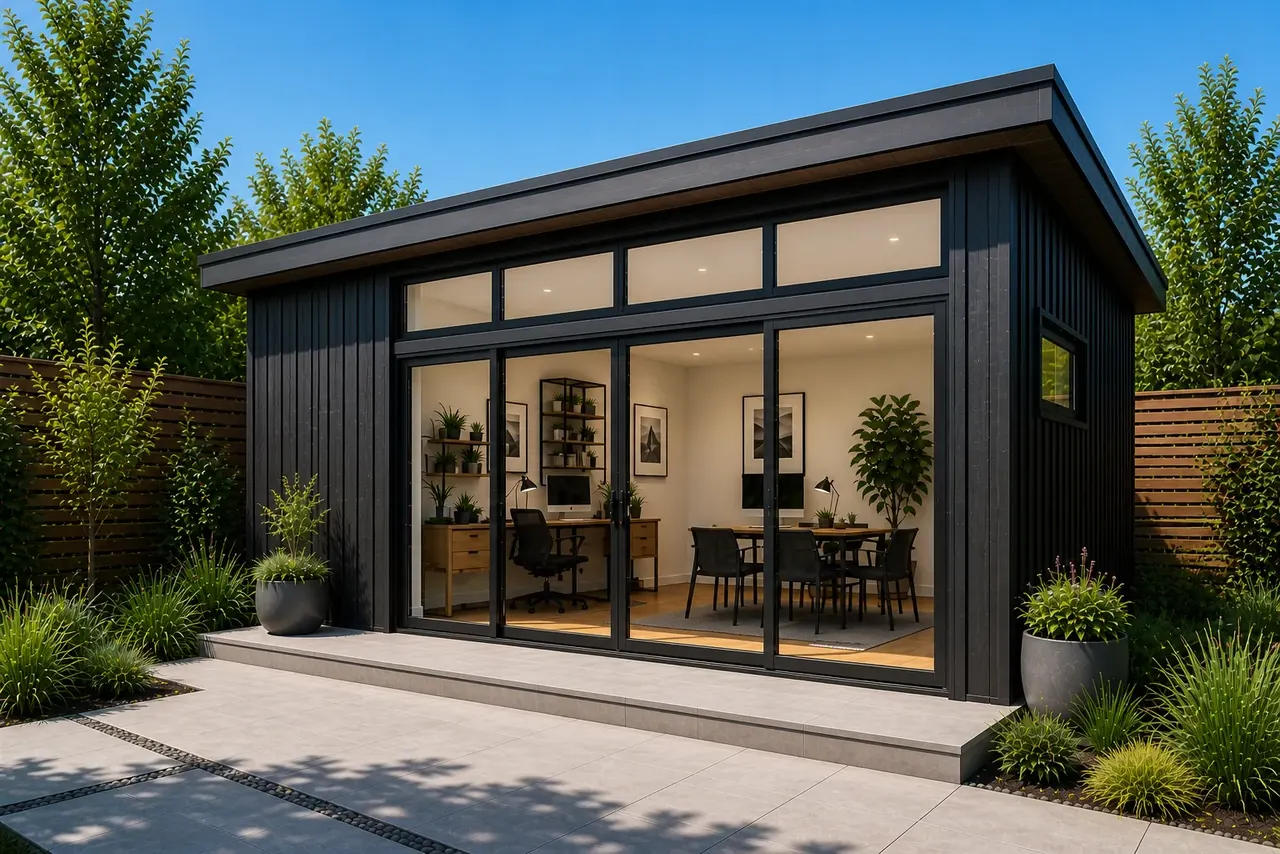
- — 01Charred cedar (shou sugi ban). Western red cedar boards charred to a controlled depth so the carbon layer closes the wood cells against salt, UV and fungal attack. Zero regular maintenance — an occasional wipe with a soft brush. 25+ year proven life on coastal installations. Reads dark, matte, quiet. Our default first suggestion for any coastal Arden & Oak brief.
- — 02Thermo-treated ash. European ash cooked at 190-215°C in an oxygen-free chamber until the sugars caramelise. Same durability benefits as charred cedar — resistant to salt, UV and rot — with a lighter tobacco-brown tone. Where a client wants a warmer, less monochrome finish, this is what we specify.
Two we've stopped specifying on the coast
- — 01Natural western red cedar (uncharred, unpainted). Silvers unevenly under salt exposure — the windward face weathers faster than the leeward face and you end up with a patchy finish inside two winters. It's fine inland but the coast is unforgiving.
- — 02Painted softwood cladding. Every 4-5 years the paint needs refreshing on an inland build. On the coast it's more like 2-3 years. Homeowners rarely have that appetite, and by year three the film is failing regardless.
What we still occasionally specify (with caveats)
- — 01Composite / fibre-cement panels. Durable and low-maintenance, but they read as commercial rather than architectural on a garden building. Only where the design brief specifically wants them.
- — 02Metal box-profile (dark powder-coated aluminium). Excellent on rear and side elevations where visual impact matters less. We use this a lot as a rear cladding to reduce cost without compromising the visible faces. Salt-resistant.
- — 03Larch (dark stained). Works if the plot is set back from the coast — half a mile plus. Directly on the seafront it starts to look tired inside three winters.
The wider spec that matters as much as cladding
Cladding is only half the coastal battle. The other half is what's underneath:
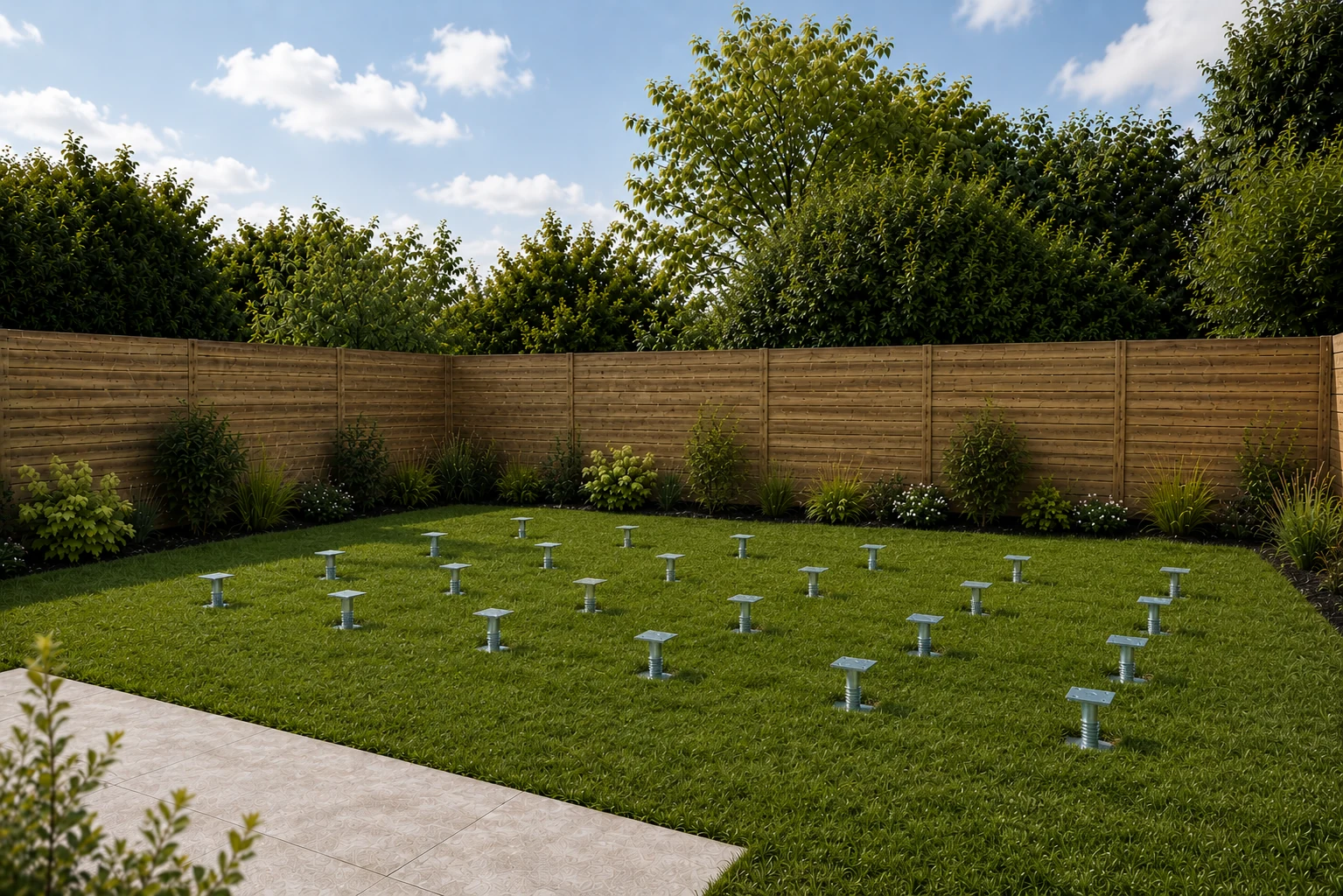
- — 01Ground screws over concrete raft. Concrete is porous and coastal ground is often sandy or shingle — a raft either has to be over-specified or corrodes at the surface. Ground screws are galvanised steel, buried below any salt-carrying zone.
- — 02Anthracite aluminium frames rather than uPVC. UV degrades white uPVC noticeably faster on the coast, and salt attacks the film. Powder-coated aluminium is inert.
- — 03EPDM rubber roof. Butyl-based, salt-inert, 25-year warranty in the coastal spec.
“We haven't specified natural cedar or painted softwood on a coastal plot in five years. The failure mode is boring and consistent — and clients don't want to be repainting a garden room every two winters.”— Arden & Oak — install team
For coastal-specific town-by-town notes see our Salcombe, Bantham, Thurlestone, Bigbury-on-Sea and Hope Cove pages. Or if you're weighing options on a specific plot, a consultation is the fastest way to get the answer that suits the exposure profile.
The design conversation on a constrained coastal plot.
Premium surf-village brief — the coastal cladding spec matters here.
Our most-specified coastal build — architectural mono-pitch.
Areas we cover most for this brief.
Three of the locations we build in most for the reading above. Every plot gets a site-specific spec conversation.