Garden room flooring — engineered oak vs microcement vs polished concrete
Three floor finishes we specify most. What each is, how it wears, what it costs, and which brief it belongs in. Real numbers from real installs.
The floor is one of the two or three surfaces a garden-room client sees most, and the one that's hardest to change once the building is up. It's worth spending 15 minutes at the specification stage getting this decision right. Below is the honest walkthrough of the three finishes we specify most — 85%+ of our builds — and what they actually feel like a couple of years in.
Engineered oak
The safe, warm default. 14-20 mm engineered board (a 3-6 mm oak lamella over a plywood core), tongue-and-groove floating floor over a 3 mm impact-underlay. Fitted in 2-3 days, sanded and lacquered on site if it's not pre-finished.
- — 01Cost: £75-140/m² supplied and fitted, depending on lamella thickness and finish.
- — 02Feel: Warm underfoot, reads natural, sits well against birch ply and painted MDF walls.
- — 03Wear: Marks with kettlebells, dents under office chair casters (fix — use a chair mat), scratches from moved furniture. Refinishable — 2-3 sandings across its life.
- — 04Water: Fine for a garden office. Not right for a shower room or a heavy-use gym.
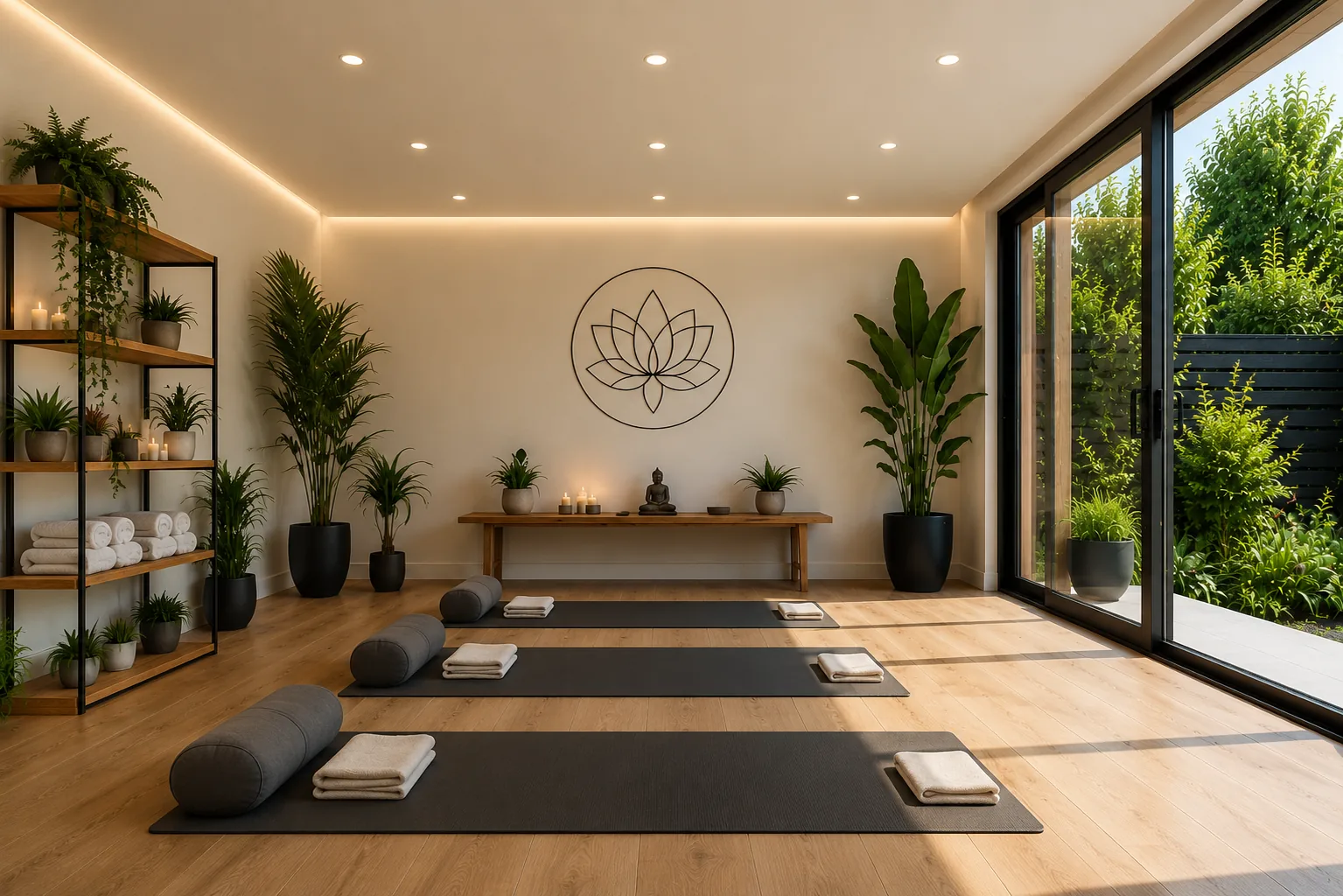
Right for: home offices, studios, therapy rooms, hangout rooms. The default 60% of what we fit.
Microcement
The specifier's choice for a considered interior. A 3-4 mm layer of high-strength cementitious topping trowelled onto the sub-floor, then sealed with 2-3 coats of high-solids polyurethane. Reads like polished concrete but half the weight, thinner, and more design-flexible.
- — 01Cost: £160-240/m² supplied and applied — the most expensive floor finish we regularly do.
- — 02Feel: Cool underfoot (mitigated by underfloor heating), reads architectural and modern, sits perfectly against dark cladding and matte black metalwork.
- — 03Wear: Extremely hardwearing. Won't dent, doesn't mark from casters, resistant to most spills. If damaged, spot-repairable but visible.
- — 04Water: Fully waterproof when properly sealed. Right for shower rooms, pool houses, garden bars.
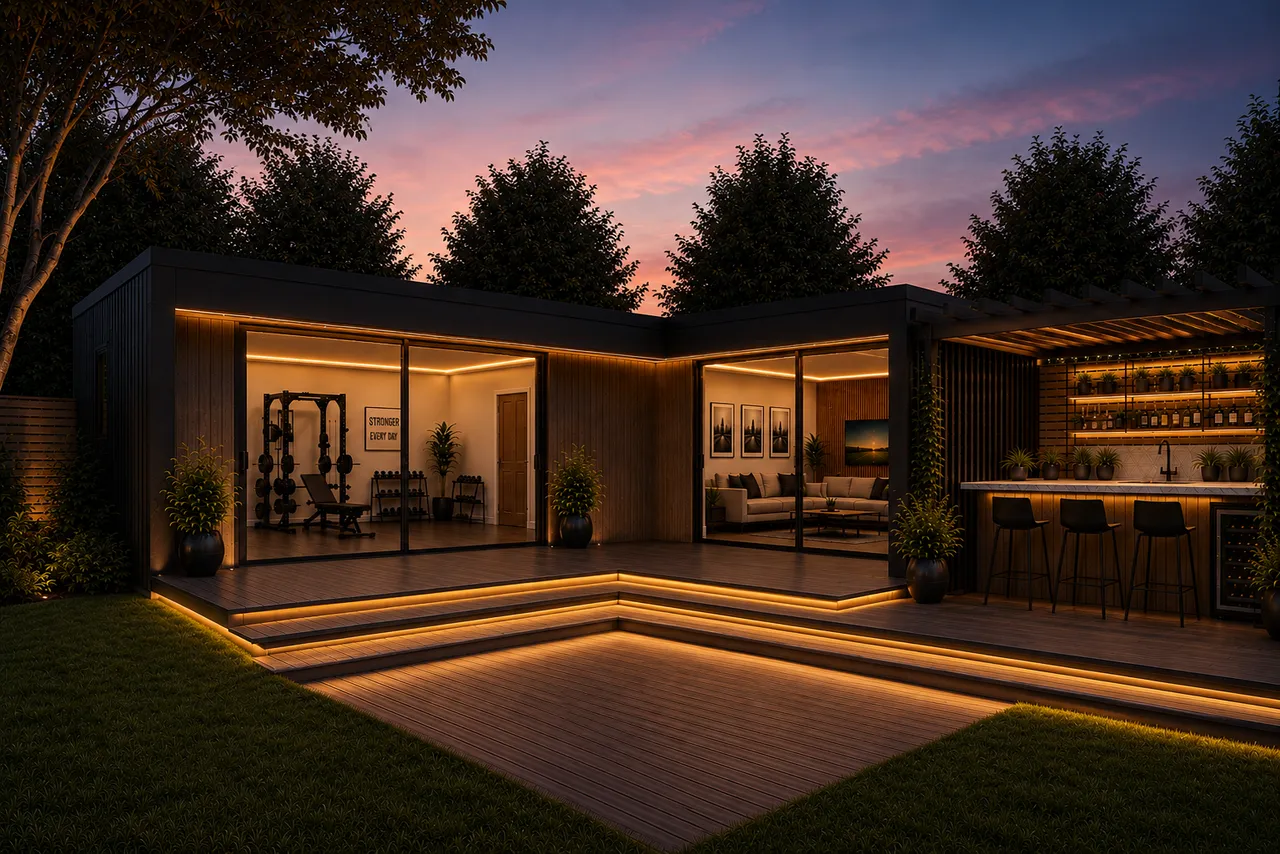
Right for: gyms, garden bars, pool houses, high-design offices, cinemas. The premium 25% of our fits.
Polished concrete
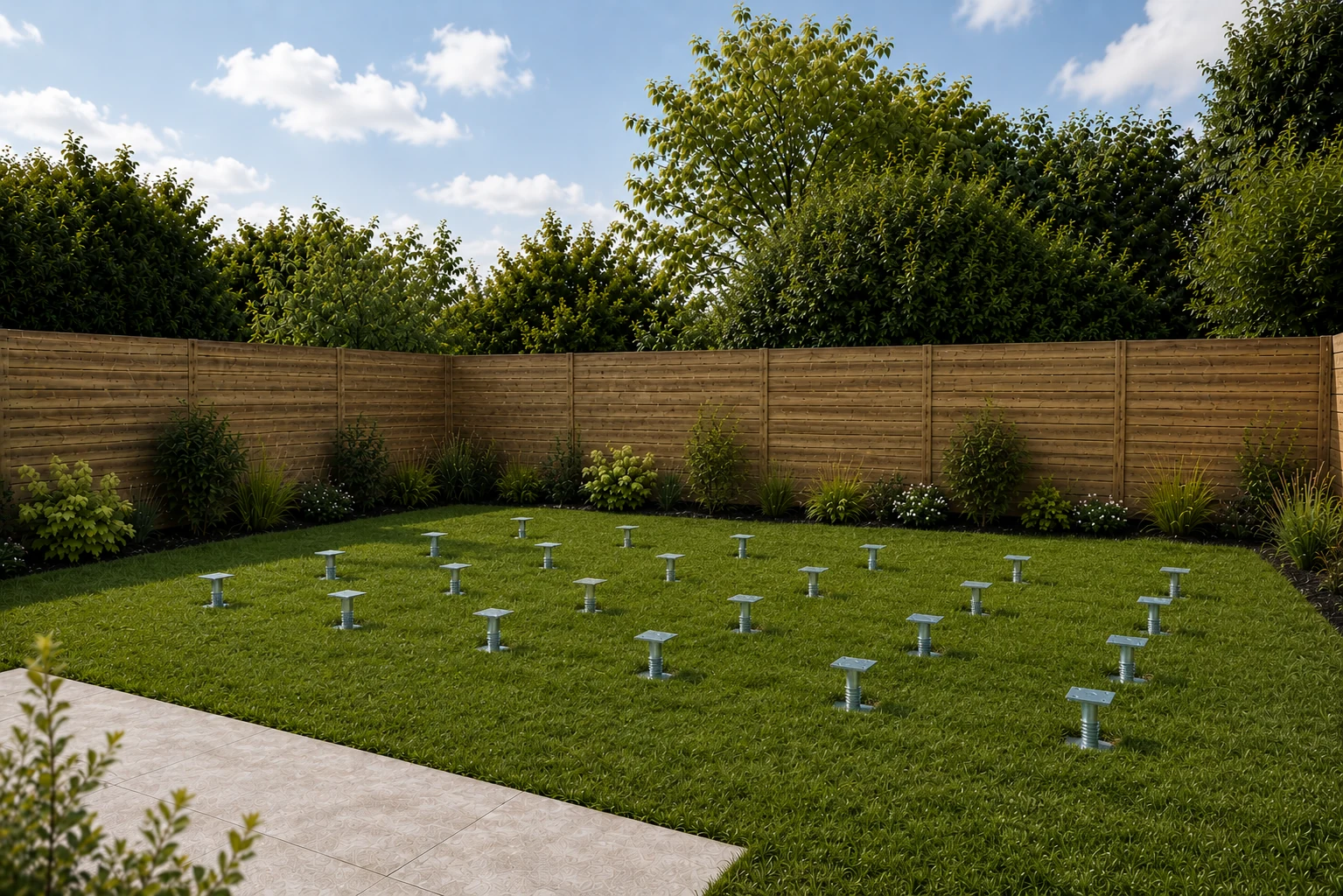
The industrial choice, but rarely the right one for a garden room. Poured concrete slab, ground and polished on site over 3-4 days. Reads solid, cool, permanent — but the weight makes it incompatible with ground-screw foundations, and the slab has to be poured to a much higher tolerance than a standard garden-room sub-floor.
- — 01Cost: £120-180/m² supplied and finished, but requires a full concrete slab foundation rather than ground screws — adding £2,500-4,500 to the base spec.
- — 02Feel: Cold underfoot (needs underfloor heating to be comfortable), hard, industrial. Great for the right brief, ruinous for the wrong one.
- — 03Wear: Genuinely permanent. Chips and cracks are possible but rare on a properly cured slab.
- — 04Water: Fully waterproof. Right for showers, pools, wet-use areas.
Right for: rare briefs — pool houses over concrete raft foundations, or garden studios where the brief specifically calls for the industrial aesthetic. Roughly 3-5% of what we fit.
The under-floor detail — matters for all three
All three finishes benefit substantially from electric underfloor heating (UFH). It's a £900-1,400 upgrade for a 4.2 × 3.2 m room and it's the single most-transformative comfort spec after the shell insulation. Microcement and polished concrete really need it — both are cool underfoot without it. Engineered oak is more tolerant but still meaningfully improved.
UFH also affects the heating conversation — an office with UFH under microcement runs at a lower thermostat setting than one with a warm oak floor, because the surface radiant temperature is doing more of the work. Worth spec'ing at design stage.
The other options — briefly
- — 01Rubber matting (12 mm bonded, sheet or interlocking tiles). The right answer for a dedicated gym. £45-65/m² supplied and fitted.
- — 02Carpet. Rarely specified — hard to keep clean in a garden environment, dates faster than harder floors. Occasional for children's play spaces.
- — 03Ceramic tile. Cost-effective for a shower or pool-house, but reads harder than microcement. £55-95/m² supplied and fitted.
- — 04Laminate. The cost-effective substitute for engineered oak. £35-55/m² supplied and fitted. Fine, but reads less premium.
“The floor is the surface that ages fastest. Spec it for the brief, not for the catalogue photo — a great oak floor in a home gym will look tired in a year, and a microcement floor in a therapy room can feel too cold.”— Arden & Oak — design lead
For the full interior conversation see the Arden Edition landing page. For the wider pricing brief, see the how-much-does-a-garden-room-cost guide.
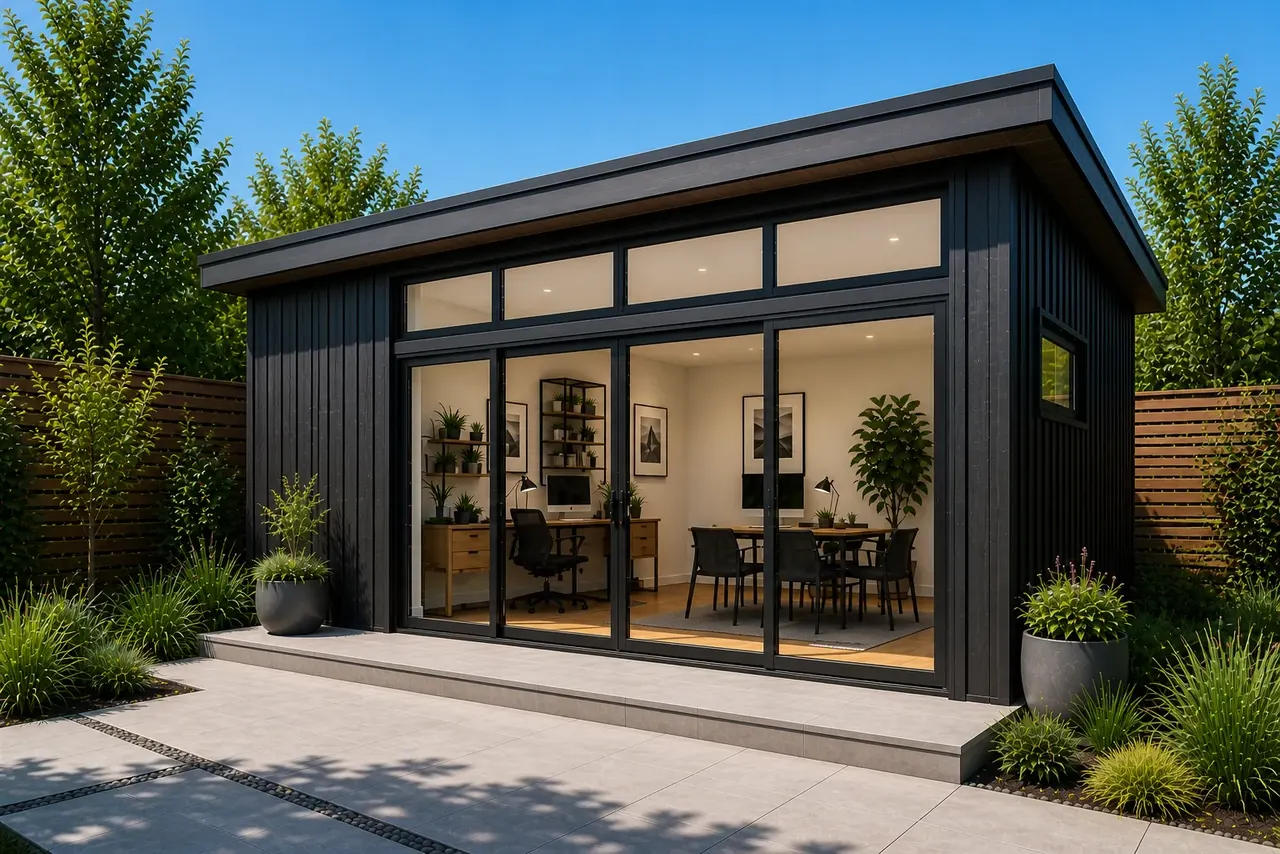
The default office footprint — engineered oak is standard on this brief.
Compact garden bar / pool house — microcement is our default here.
The wider pricing conversation — the floor sits inside it.
Areas we cover most for this brief.
Three of the locations we build in most for the reading above. Every plot gets a site-specific spec conversation.