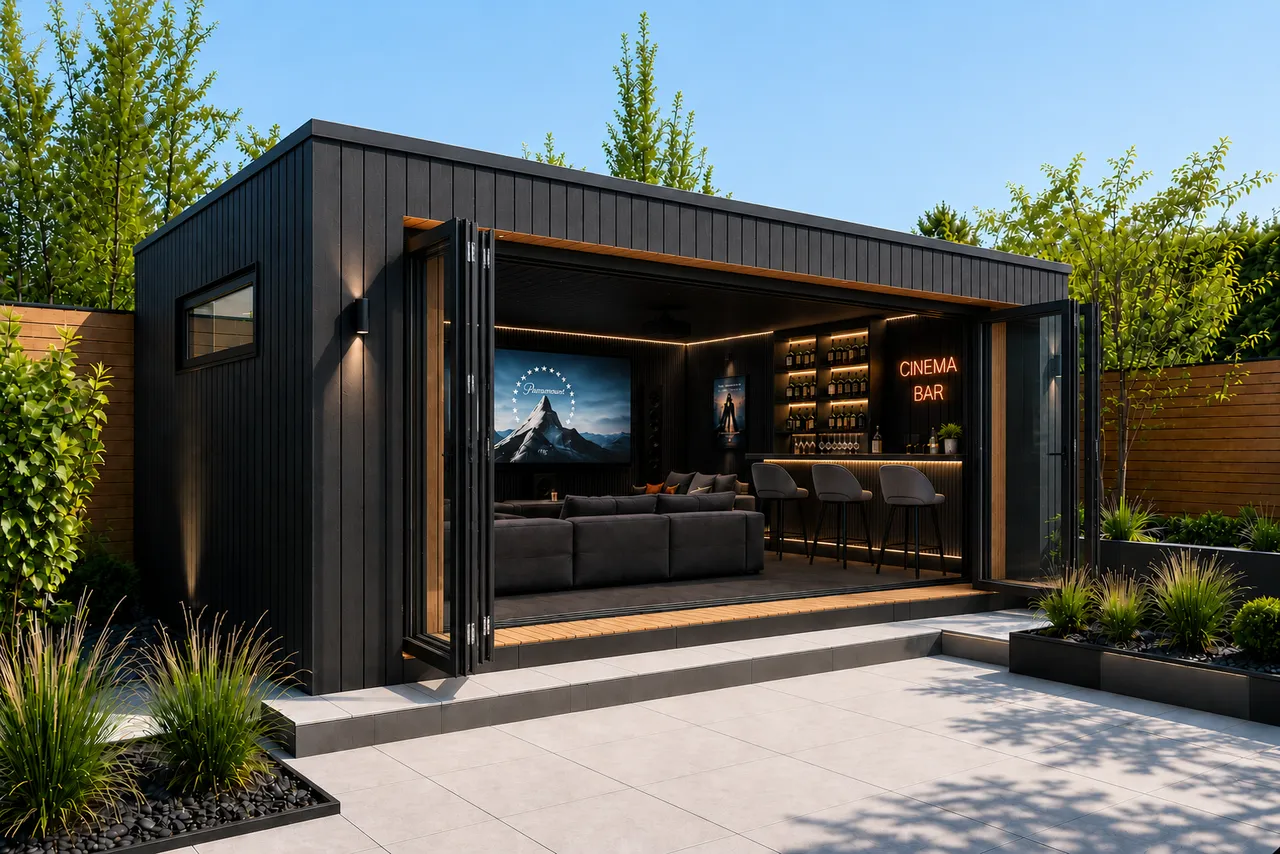
Garden offices and UK tax — what self-employed and limited company buyers should know
A plain-English overview of how UK tax rules typically treat a garden office. Not advice — but enough to ask your accountant the right questions.
Roughly two-thirds of the garden offices we build are bought to be used for work. Of those, most clients have asked us — usually halfway through their consultation — some version of the same question: 'Can I put this through the business?'
It's the right question. The answer is genuinely 'often, partially, yes' — but the rules are stricter than most internet articles suggest, and getting them wrong can cost you more than you save. This is a plain-English overview of how UK tax rules typically treat a garden office. It is not tax advice, and we are not accountants. Every situation is different. The point of this piece is to leave you well-enough informed to have a precise conversation with a qualified accountant.
“Tax treatment varies depending on personal circumstances and business structure. Arden & Oak does not provide tax, accounting or legal advice. We recommend speaking to a qualified accountant before relying on any tax benefit.”— Standing disclaimer
The two routes that matter
Almost every UK garden-office buyer falls into one of two camps, and the tax treatment for each is meaningfully different:
- — 01Sole trader / self-employed — you and the business are one legal entity. You pay tax on profits, and certain garden-office costs can usually be deducted from those profits before tax is calculated.
- — 02Limited company director — your company is a separate legal entity. The company can typically purchase or contribute towards a garden office, and certain running costs can be offset against company profits. But personal-use rules apply tightly.
There's also a third smaller group — employed workers using a garden office for work-from-home days — for whom the rules are tighter still. We touch on that at the end.
If you're self-employed
HMRC's general principle is that you can deduct expenses incurred 'wholly and exclusively' for the purposes of your business. Applied to a garden office, that typically means:
- — 01Running costs — a portion of your electricity, heating, broadband and insurance proportional to business use are commonly deductible.
- — 02Office furniture, computers and equipment — usually claimable as business expenses or via capital allowances (the 'Annual Investment Allowance' currently lets most businesses deduct the full cost of qualifying equipment in the year of purchase).
- — 03Repairs and maintenance to the workspace itself — generally deductible if the building is genuinely a business asset.
- — 04The building itself — this is the contested area. HMRC traditionally treats the structure of a garden office as a capital expense that cannot be fully deducted in one go. However, integral fixtures (electrical wiring, plumbing, lighting, heating) and some 'plant and machinery' elements within the build may qualify for capital allowances. Your accountant will need to allocate the build cost across categories.
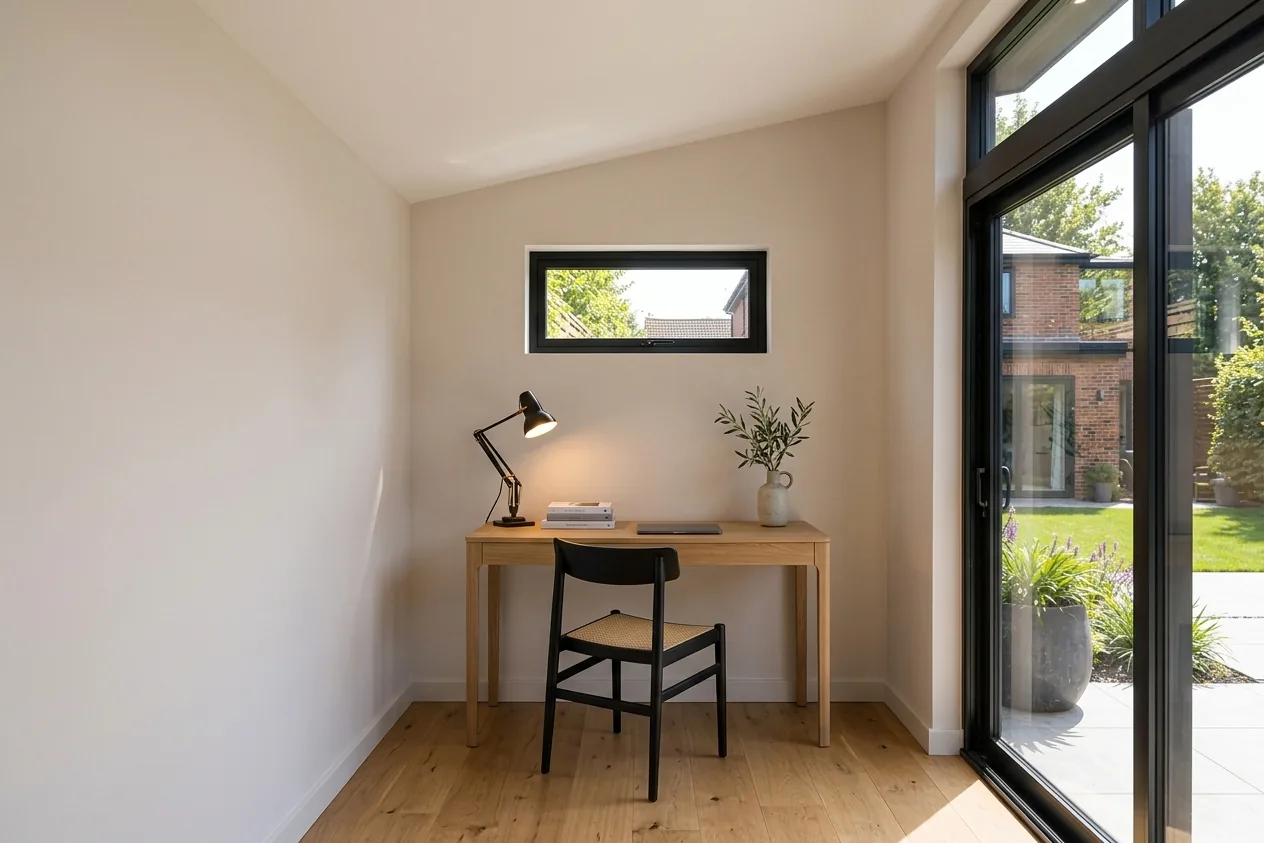
If you operate through a limited company
This is where the most interesting opportunities — and the biggest traps — sit. A limited company can in principle purchase a garden office and treat parts of the cost as a business expense. In practice, the rules around 'benefit-in-kind' (BIK) make this trickier than it looks.
- — 01If the building is used exclusively for business — for example, used only during working hours, with no domestic / family use — many running costs can be paid by the company without triggering a personal benefit-in-kind charge.
- — 02If the building has any meaningful personal use (the kids do homework in it, you use it as a study at weekends, you spend a Sunday hour on a hobby there), HMRC may treat part of the cost as a personal benefit, which then becomes taxable income for the director.
- — 03Capital allowances on plant and machinery components (lighting, electrics, integral heating, blinds, kitchenette fittings) are typically available even where the structure itself isn't allowable.
- — 04VAT — if your company is VAT-registered, you may be able to reclaim VAT on the proportion of the build cost that relates to business use. Again, the apportionment matters.
“If the room is used for anything other than work — even just a corner used for personal hobbies — your accountant will usually need to split the costs between business and personal use. That apportionment is the whole game.”— Common accountant guidance
The capital gains tax trap on sale of home
This is the one nobody warns you about, so we will. If you sell your home, the gain on your main residence is usually fully exempt from Capital Gains Tax under 'Private Residence Relief'. However, if part of your property has been used exclusively for business — and a garden office that's been put through the company often qualifies — that exclusive-use proportion can lose its CGT exemption.
In practice the amounts are usually small relative to the value of the house, and there are timing rules and reliefs (lettings relief, final-period exemption etc.) that can soften the impact. But it's a calculation your accountant should make before, not after, you sell. Some clients deliberately keep a small element of personal use precisely to preserve full Private Residence Relief on the whole property.
If you're an employee working from home
The rules here are tighter. Most employees can't claim back the cost of a garden office — your employer would generally need to provide it for it to be a business asset, and any provision creates a benefit-in-kind unless very specific conditions are met. Speak to your employer first, then to an accountant. A small number of clients in this category have their employer contribute towards the office as part of a formal home-working arrangement — but it's a tailored conversation, not an off-the-shelf claim.
What 'might' be claimable, in plain terms
Pulling the threads together, here's the rough hierarchy of what most accountants tell our clients is potentially available — always subject to your specific circumstances:
- — 01Office furniture (desk, chair, shelving) — usually claimable in full.
- — 02Computers, monitors, technology — usually claimable in full under Annual Investment Allowance.
- — 03Electricity, heating, broadband, insurance — usually claimable as a proportion based on business use.
- — 04Wiring, lighting, integral heating, kitchenette fittings — often claimable as 'plant and machinery' capital allowances.
- — 05The structure of the building itself (walls, roof, cladding, foundations) — typically not claimable as a one-off deduction, but may form part of capital allowances or matter for VAT.
- — 06Running maintenance — generally deductible where the room is a genuine business asset.
Three questions to ask your accountant
If you take nothing else from this article, take these. Bring them to your accountant before you commission a build and the conversation tends to be far more productive:
- — 01How should the build cost be apportioned between structure, integral features (plant and machinery), and furniture? — this single allocation drives most of what's claimable.
- — 02Should the building be purchased personally or through my limited company, given my expected business and personal use? — the answer depends on your circumstances, but it should be a deliberate choice, not an accident.
- — 03What CGT consequences should I plan around when I sell the house? — there usually are some, and they're manageable if planned for.
The honest closing
A well-built garden office can genuinely save a meaningful amount of tax for the right buyer, in the right circumstances, with the right accountant. It can also create costs you weren't expecting if you assume the rules work the way the marketing copy says they do. The difference between those two outcomes is twenty minutes with a qualified accountant before you sign anything.
We're happy to liaise with your accountant during the design stage to make sure the build is documented and itemised in a way that supports their work — invoices broken down by category, capital-allowance-eligible components called out, VAT applied properly. Ask us for that at the consultation and we'll make it part of how we work with you.
Areas we cover most for this brief.
Three of the locations we build in most for the reading above. Every plot gets a site-specific spec conversation.