Bi-fold, sliding or French — which doors are right for your garden room?
Three good answers, three different rooms. A direct comparison from a studio that fits all three every week.
The door system is the second-biggest decision a garden-room client makes after the building's overall size. It defines how the room reads from the garden, how it relates to the outside in summer, how secure it feels in winter, and how a significant portion of your budget gets spent. Get it right and the room comes alive. Get it wrong and a beautiful build feels permanently slightly off.
Almost every Arden & Oak project lands on one of three glazing systems: bi-fold, sliding, or French. Here's the working comparison we use with clients during their design consultation.
Bi-fold doors — for the room that wants to disappear
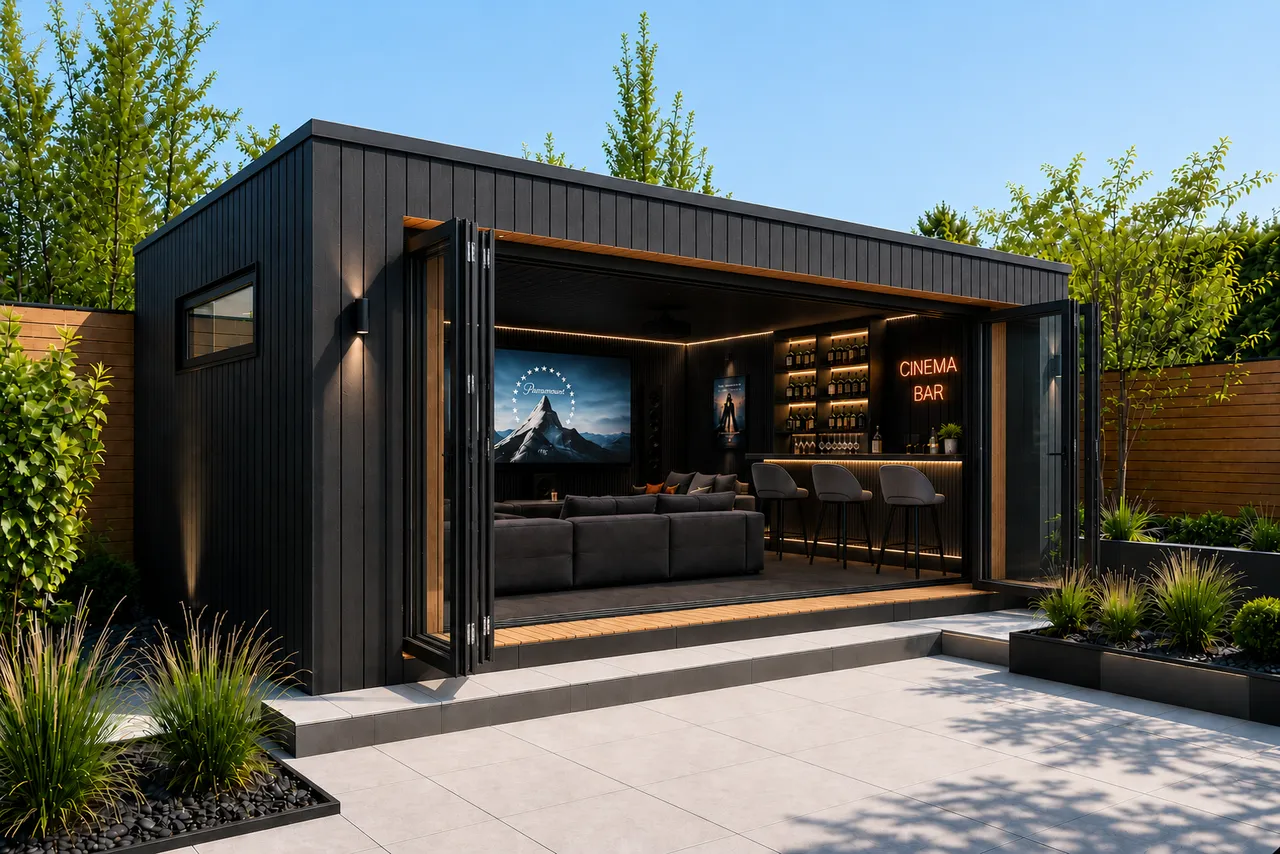
Bi-folds fold and stack against one side of the opening, leaving 85–95% of the wall open to the garden. They're the most dramatic, party-friendly choice — when you throw a bi-fold open in summer, the entire room becomes a covered patio.
- — 01Best for: games rooms, garden bars, screening dens, entertainers, families with kids who flow between the room and the garden.
- — 02Standard widths: 2.4 m / 3.0 m / 3.6 m — typically 3 or 5 leaves.
- — 03Compromise to know: when closed, you'll see two or four vertical frame uprights interrupting the view. Sightlines are 'good', not 'flawless'.
- — 04Indicative cost: £1,750–£2,350 over the standard French-door allowance.
Sliding doors — for the cleanest possible view
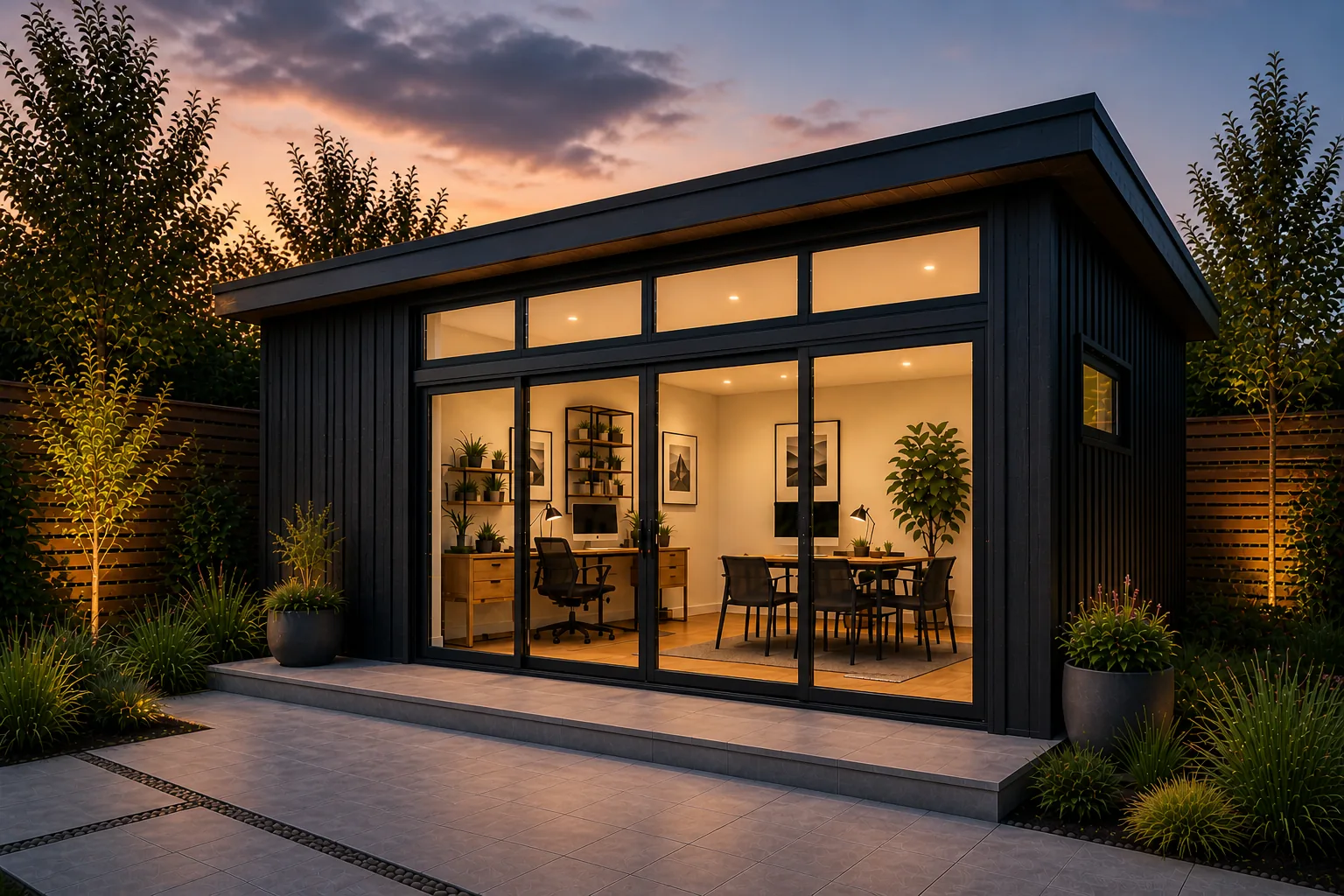
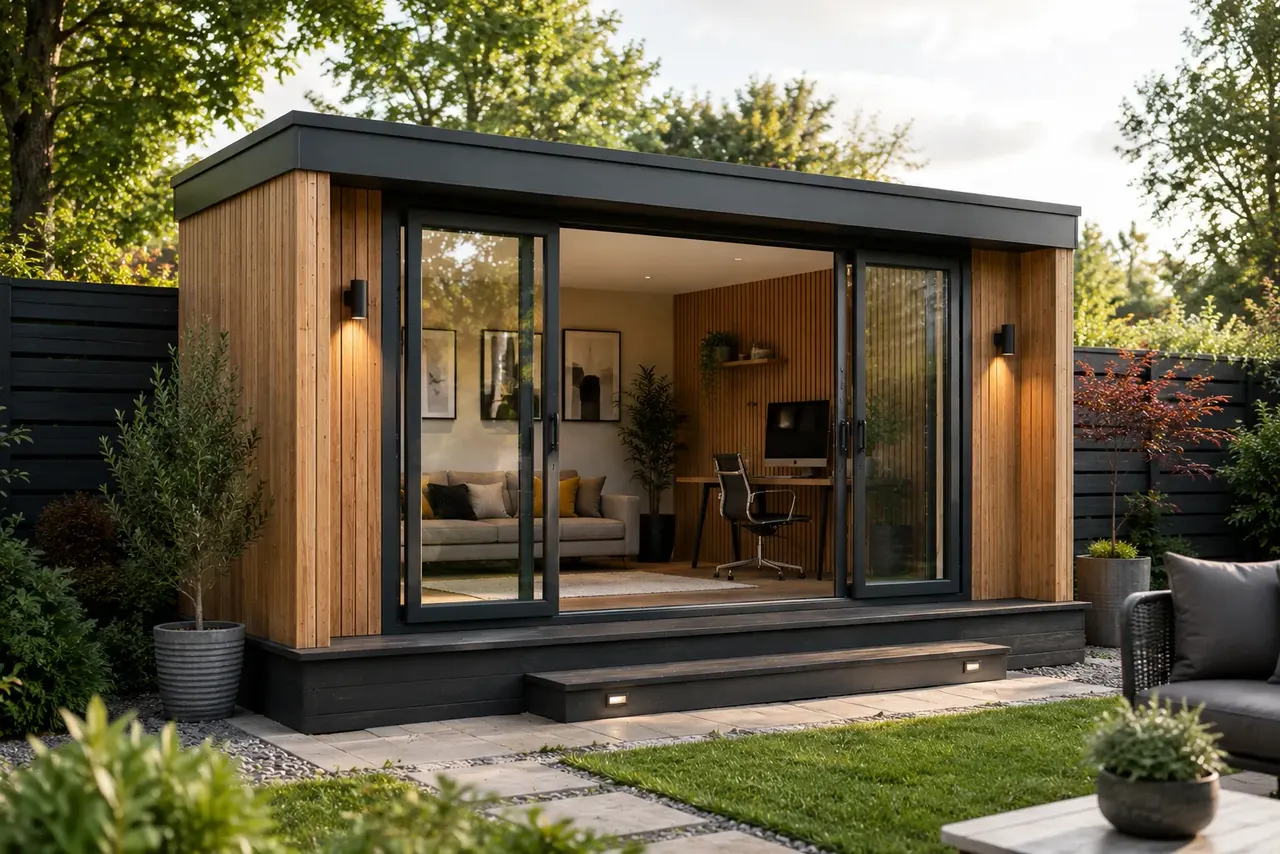
Sliding doors run on a single track, with one leaf passing behind the other. The result is the largest single pane of uninterrupted glass you can get — incredible sightlines from inside, and from the garden looking back. When closed, the doors read almost as a single wall of glass.
- — 01Best for: home offices, formal studios, art rooms, anywhere the view itself is part of the brief.
- — 02Standard widths: 1.8 m / 2.4 m / 3.0 m / 3.6 m — usually 2 or 3 panels.
- — 03Compromise to know: the opening is only ever half (or one-third) of the door width. Sliders give the best closed view but the smallest actual opening.
- — 04Indicative cost: £850–£2,150 over the standard French-door allowance, depending on size.
French doors — quietly the right answer more often than you'd think
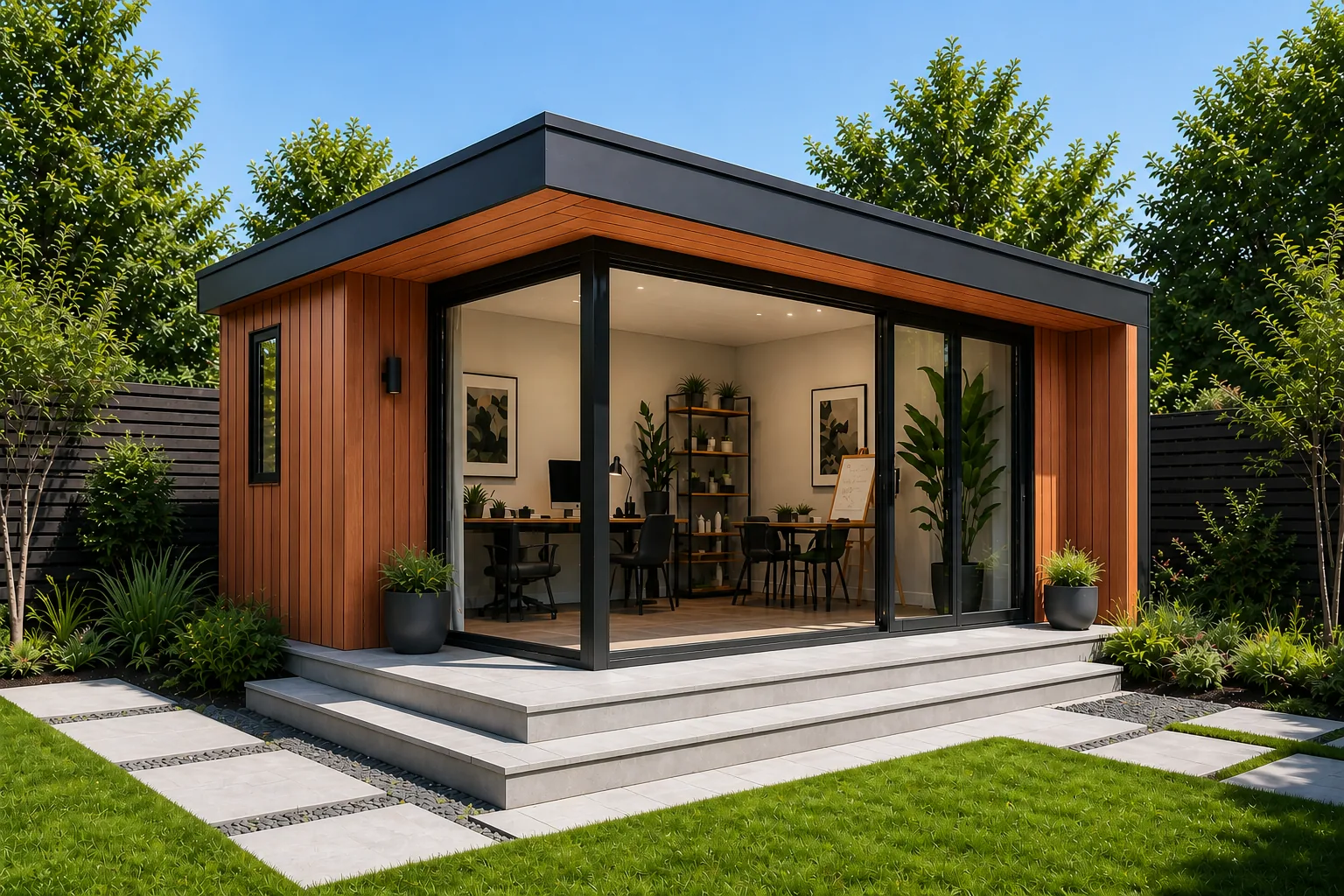
French doors are a pair of hinged leaves that swing outward. They're often dismissed as the 'cheap' option because they come as standard, but they're a thoughtfully right choice for smaller rooms, traditional gardens, and any room that values proportion and symmetry over drama.
- — 01Best for: compact rooms (under 3 × 2.5 m), reading retreats, treatment rooms, traditional cottage gardens, rooms set back from the lawn.
- — 02Standard widths: 1.5 m / 1.8 m / 2.4 m — almost always 2 leaves.
- — 03Compromise to know: opening width is fixed by the door size — there's no 'wide open' configuration as with bi-folds.
- — 04Indicative cost: standard inclusion on most builds — the natural default.
The thermal and acoustic angle
Most clients focus on aesthetics, but the door system has a real impact on how the room performs in use. As a rough hierarchy:
- — 01French doors are typically the most thermally efficient — fewer seals, no slide tracks, tightest perimeter compression.
- — 02Sliding doors are next — single track, simpler frame profile, double or triple glazed.
- — 03Bi-folds have the most seals and the most moving parts — modern systems are excellent, but mathematically they'll always be slightly more heat-loss prone than a comparable hinged system.
On a SIP-shell build with 216 mm insulated walls, this difference is small enough that it shouldn't drive the decision — pick the door system that suits the brief, and trust the wall to do the heavy lifting.
“Nine times out of ten, clients ask for bi-folds. Half the time, when we've talked the brief through properly, they land on sliders. Both are great. They just answer different questions.”— Arden & Oak — design consultation notes
A two-question shortcut
If you'd rather not read all of the above twice, here's the working version of the decision tree we use in the design call:
- — 01Will the room mainly be used with the doors closed (office, studio, music)? → Sliders for the cleanest view, French for the smallest budgets.
- — 02Will the room flow into the garden in good weather (games room, bar, family hangout)? → Bi-folds, every time.
If you genuinely use the room in both modes — for example, an office that hosts garden parties — we'll often spec a wide slider on the front face and a discreet hinged side door, giving you both the closed-up sightline and the open-air option without compromise.